The loudest voice is not the smartest group
06 Jul 2026A confident voice can ask a sharp question at the wrong moment and close a room down. In a meetup, the cost is one nervous speaker and a room that goes quiet. In a company, the same habit compounds, meeting after meeting, until the same few people decide what the team is allowed to say out loud.
You see the pattern at conferences first. The people who are confident keep speaking. The people finding their voice hold back. Over time the room narrows. The same voices return, the same ideas circulate, and the different takes never get a hearing.
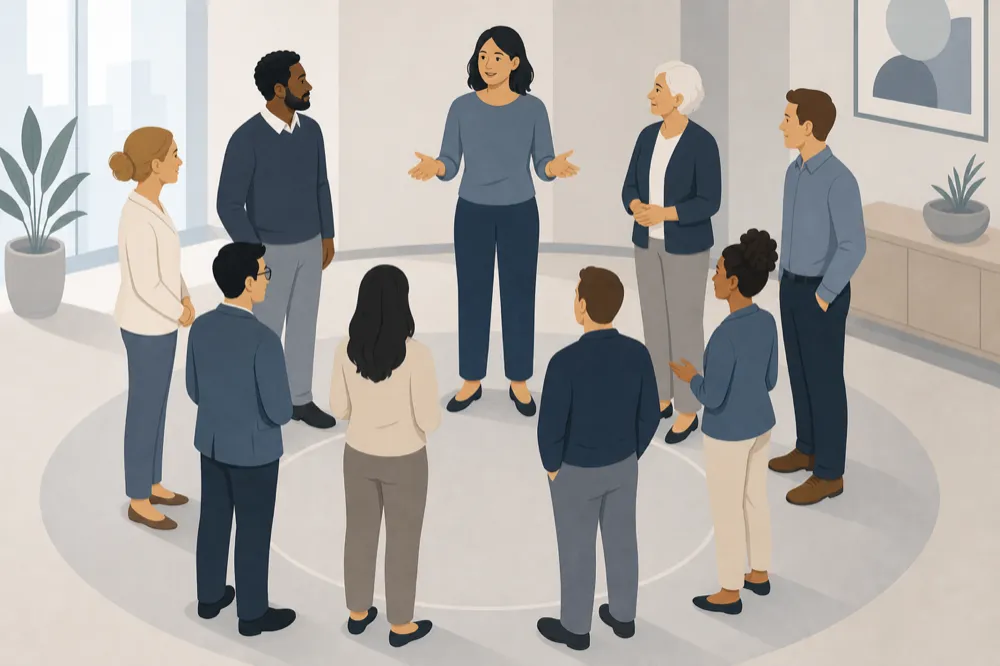
When one voice dominates
Anita Woolley and her colleagues measured what this does to a group. In their 2010 study in Science, a group’s collective intelligence had little to do with the smartest person in it. It tracked social sensitivity and whether people took turns or one voice dominated.
Groups where a few people dominated the conversation showed less collective intelligence than groups where more people took turns. Let the loudest voices dominate and the group gets duller.
The room with the cleverest individual is not the room that thinks best. You want the room where more people get to speak.
Meetings that go quiet
I’ve sat in too many meetings where the same few people talk, the leader says “any questions?”, and the silence pushes everyone to the anonymous form.
Sometimes anonymity is right. If someone’s job is on the line, or the company is about to change under people’s feet, of course. For the day to day, you have to give people room to speak and build the culture that makes them want to.
A quick yes is a warning
A room can go quiet in another way. Everyone nods, the plan passes, and it looks like agreement. Amy Edmondson uses a cartoon of a management team waving a decision through, every one of them saying aye, while their thought bubbles say the opposite. In a real meeting you cannot see the thought bubbles, but they are there.
Alfred Sloan ran General Motors on the opposite instinct. When his senior team agreed a big decision on the spot, he told them he took it they were all in agreement, then proposed they postpone it to the next meeting to give themselves time to disagree. The quick yes was the part that worried him.
Drive out fear
W. Edwards Deming put driving out fear at the centre of how he thought about management, not only in high-stakes moments but in the everyday. He made it his eighth point: “Drive out fear, so that everyone may work effectively for the company.”
I sit on the Deming side of this. You hire smart people for their ideas. No single person, however senior, has thought of every angle of a problem, and in a busy week the viewpoints are the reason you hired them. The sharing shouldn’t depend on the leader organising it either.
A team should be able to give each other the space and the time to speak. That’s the same habit I compared to a cricket side fielding together, sharing information out loud and backing each other up.
I’ve been on both sides
Just before Covid I gave a talk on how I build apps at a local UX meetup. The room was mostly designers. They asked how I worked with their mockups and handoffs, I answered, and we both came away with something.
A month later I ran the same deck at a company I’d just joined. Six colleagues watched the practice session and liked it. At the company-wide session the organiser told the room this was meant to be a discussion, not a presentation, then interrupted me within the first few minutes. She talked over my answers for the rest of it. At the end she told the room I’d wasted everyone’s time.
Afterwards several attendees messaged me to apologise for her. What I didn’t understand at the time was that nobody there had done these sessions before. I was the first.
Show and tell beats abstract talks
That was alien to me, because I’d come from a place where we ran a regular show and tell and everyone was encouraged to present. I did one on TypeScript and Tailwind.
I learned more from watching colleagues talk through their own approaches than any conference could teach me, because it was about our domain and the code we shipped.
People quote Conway’s Law about systems mirroring the organisations that build them. This is the other half of it. Sharing ideas and arguing about how things work, out loud, breaks down the walls between teams.
Talks tied to what someone shipped on Tuesday land. Abstract ones don’t.
Count the voices
At your next meeting, count how many people speak and how many ask a question. Note the number. Your job is to make it bigger next time.
One way in is an icebreaker, if you’re leading, or you can suggest one to whoever is. Skip the cheesy and personal ones. Most people dread sharing a childhood fun fact before a sprint review, and it ignores their privacy. Keep it trivial. Ask the room whether it’s jam or cream on a scone first.
There’s no right answer and nothing at stake, so anyone can answer, and in half a minute the whole room has spoken once.
What matters is that each person has used their voice early, before anything is on the line. When someone speaks, the rest of the room notices they are there. On a video call that counts for more than it should. The software puts the current speaker front and centre and buries the rest, so in a big meeting you can go the whole hour without seeing half the people in it. One round of small answers pulls the quiet ones back onto the screen, and into the room.
The loudest voice can make a room feel decisive. It also makes the room duller. Build rooms where more people speak.
I wrote about the meetup side in Good questions protect the room.