A confident voice can ask a sharp question at the wrong moment and close a room down. In a meetup, the cost is one nervous speaker and a room that goes quiet. In a company, the same habit compounds, meeting after meeting, until the same few people decide what the team is allowed to say out loud.
You see the pattern at conferences first. The people who are confident keep speaking. The people finding their voice hold back. Over time the room narrows. The same voices return, the same ideas circulate, and the different takes never get a hearing.
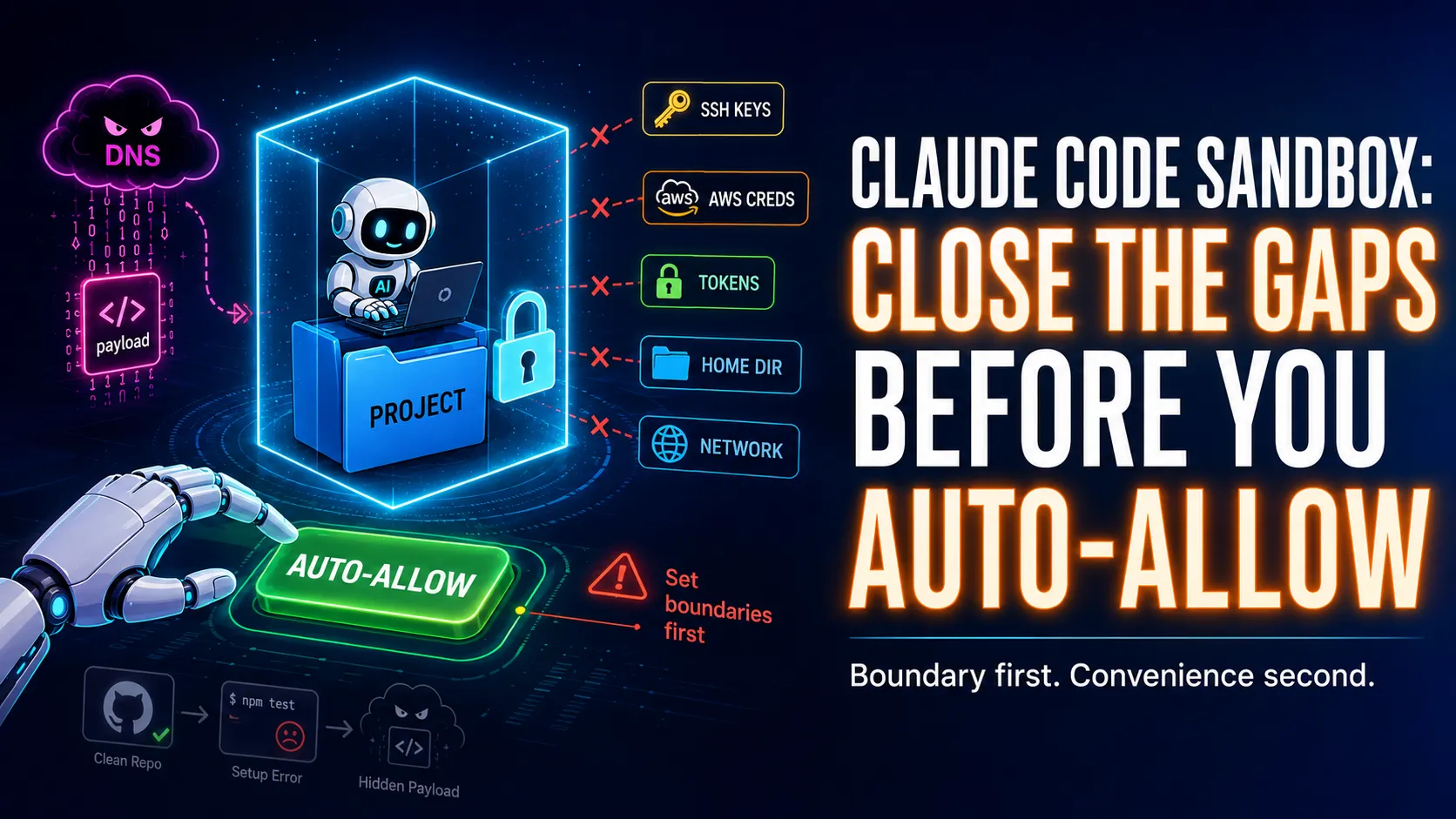
Most Claude Code sandbox guides sell convenience. Fewer prompts, smoother flow, less time approving commands.
But what about the blast radius?
When an AI agent runs a command, it does not only run the command you had in mind. It runs every child process, package script, setup hook and recovery step that command sets off.
A helpful agent reads a README, installs a dependency, retries a failed setup step, and turns “get this project running” into “execute whatever this project tells me to execute.”
The sandbox is a boundary, not a trust button. And the boundary only protects you to the extent you configure it.
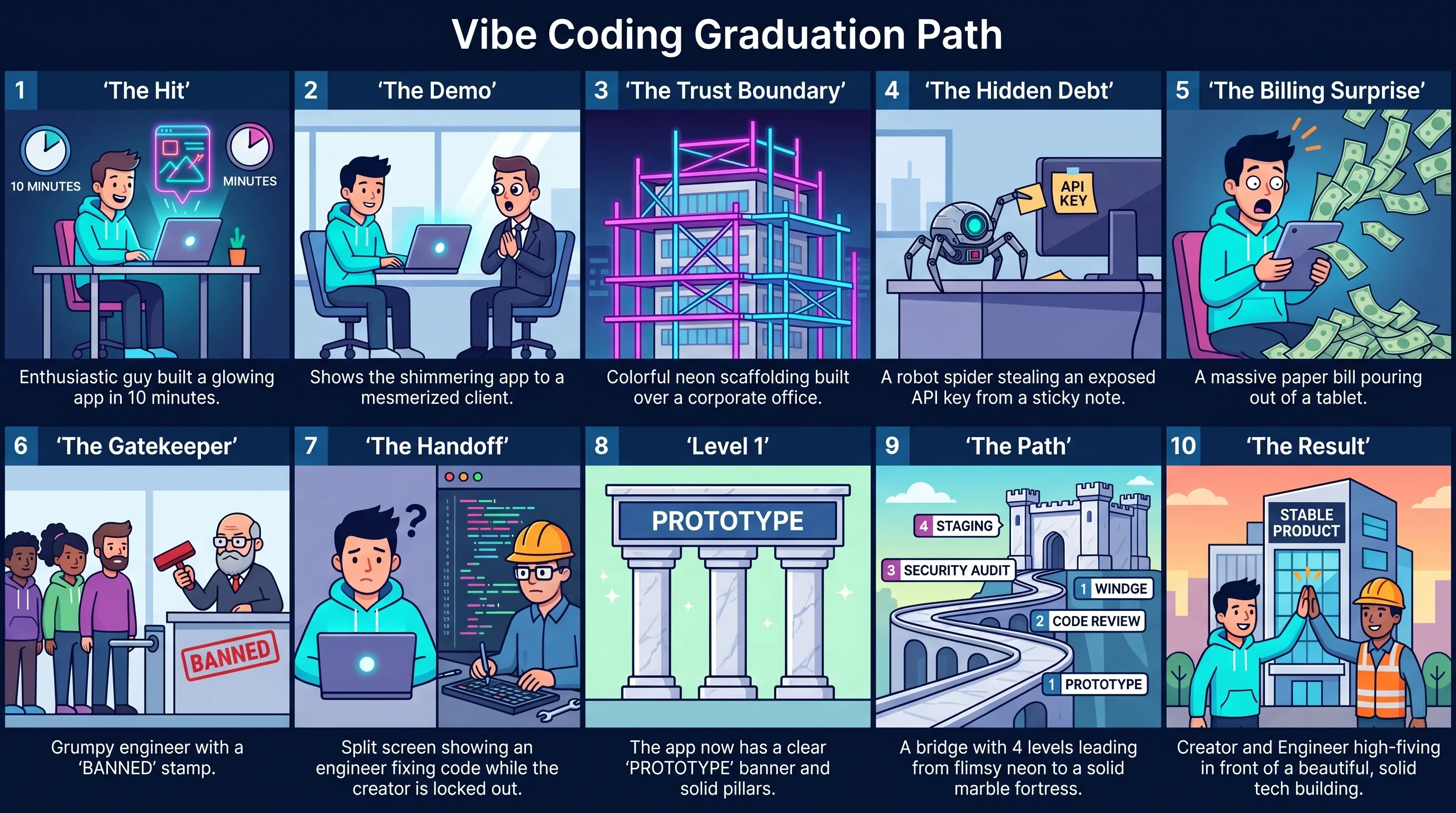
I’ve seen non-developers build apps that would have taken engineers days, if not weeks.
Not just functional apps, but polished apps with rich functionality that bring joy to users. They meet real needs, and the attention to detail is unmatched.
Product people and domain experts can build good apps, and they build them fast.
So the question is: when does a vibe-coded app become a real product?
That is the question a lot of companies are about to face.
In many businesses, engineers are no longer the only people building the next prototype. Client managers, sales teams, product people and domain experts build it too, using tools like Lovable, Base44, Claude and other AI app builders.
@jagreehal/sandbox-node runs your npm install in a throwaway container that can see your project and the registry, and nothing else.
Install scripts still run. node-gyp still builds. Your SSH keys, npm token, cloud credentials, and .env are not in the box, so a malicious dependency has nothing to steal and nowhere to send it.
The most-recommended npm defence right now is a cooldown: refuse to install any version published more recently than a few days ago. pnpm shipped it as minimumReleaseAge, Aikido Safe Chain turns it on by default, and after the recent Shai-Hulud-style npm worms, it became the advice everyone repeats.
It is good advice. It closes the window these worms detonate in. But “set a cooldown” is being sold as if it were the whole answer, and it is not. A cooldown knows one thing about a package: how old it is. There are at least three reasons it is not enough on its own, and for those, age is the wrong question to ask.
You run npm install without thinking. It looks like a download step. It is a trust decision.
Every package that resolves into your tree can run code the moment it installs, with the same access you have: your SSH keys, the npm token in ~/.npmrc, your cloud credentials, your .env. Not the package you typed. Any of the hundreds underneath it. You approved none of them by name, and the package manager never asked.
The fix is not to read more or trust less. It is to run that install somewhere your secrets are not.
In the middle of a supply-chain incident, the maintainer is not just fixing packages. They are locked out of their account, answering reports, trying to contact registries, trying to warn users, and trying to prove what happened.
That is the part we do not talk about enough.
Most open source maintainers are not companies. They do not have incident response teams. They do not have a security department. They have a GitHub account, an npm account, a laptop, and a lot of people depending on them.
Security advice often assumes the maintainer is the weak link. That is backwards. The maintainer is the last line of defence, usually unpaid, usually alone, and often locked out of the systems they need during the incident.
This is the checklist I wish every maintainer had before something goes wrong. No single setting saves you, so it works in layers: the account, the branch, the release path, the workflow, the tokens, the files, the tripwires, and the recovery plan.
In June 2026, a self-propagating npm worm compromised maintainer accounts and republished their packages with malware inside. Maintainers woke to hundreds of malicious versions across dozens of packages, often published in a few minutes overnight.
Many of those versions went out through npm’s trusted publishing, the tokenless way to publish from CI, and they carried valid provenance. The green badge, the Sigstore attestation, the “built from this repo by this workflow” proof: all real.
The worm never needed an npm password for those publishes. It used the release pipeline itself.
Trusted publishing remains the right approach. Many configurations leave one field blank, and that blank field is the gap. Closing it takes about five minutes per package. This post shows the attack and the settings that would have stopped the snapshot-branch half of it.