⚽️ Dropped by then and current manager Sarina Wiegman from the England squad in 2022 amid concerns over her attitude and conduct, she remained outside the national setup for almost two years.
⚽️ Born with strabismus and challenged by depth‑perception issues, she was told by doctors she should not play football.
⚽️ Rebuilt her career at Chelsea, playing an integral role in winning the treble last season.
⚽️ Chosen as England's first-choice goalkeeper ahead of the great and brilliant Mary Earps.
⚽️ Delivered under pressure in the quarter‑final versus Sweden, even with a bloody nose. Named Player of the Match.
Tonight, she starts in a European final for England.
Even when things don’t go your way, never give up.
Unlock reliable, testable AI agents by treating your LLM as a parser, not an executor. Learn how converting natural language into structured tool calls leads to predictable, scalable systems.
After building production AI systems over the past few years, thanks to HumanLayer, I’ve learned that most agent failures aren’t about the LLM, they’re about architecture.
That’s why I’m creating a series of posts sharing the 12-Factor Agents methodology using Mastra.
In each part, I’ll break down one principle that transforms fragile prototypes into robust, production-ready AI agents.
Last month, I had the fantastic opportunity to run a hands-on Model Context Protocol (MCP) workshop. It was a chance to mentor and coach colleagues, from engineers and testers to product owners, as we explored what MCP is, how it works, and why it is generating so much momentum across AI and developer communities.
My goal was not just to share knowledge. It was to guide the learning journey and build a shared, foundational understanding of this powerful emerging standard.
Workshop Highlights
We covered everything from core protocol basics and prompt crafting to real world patterns such as:
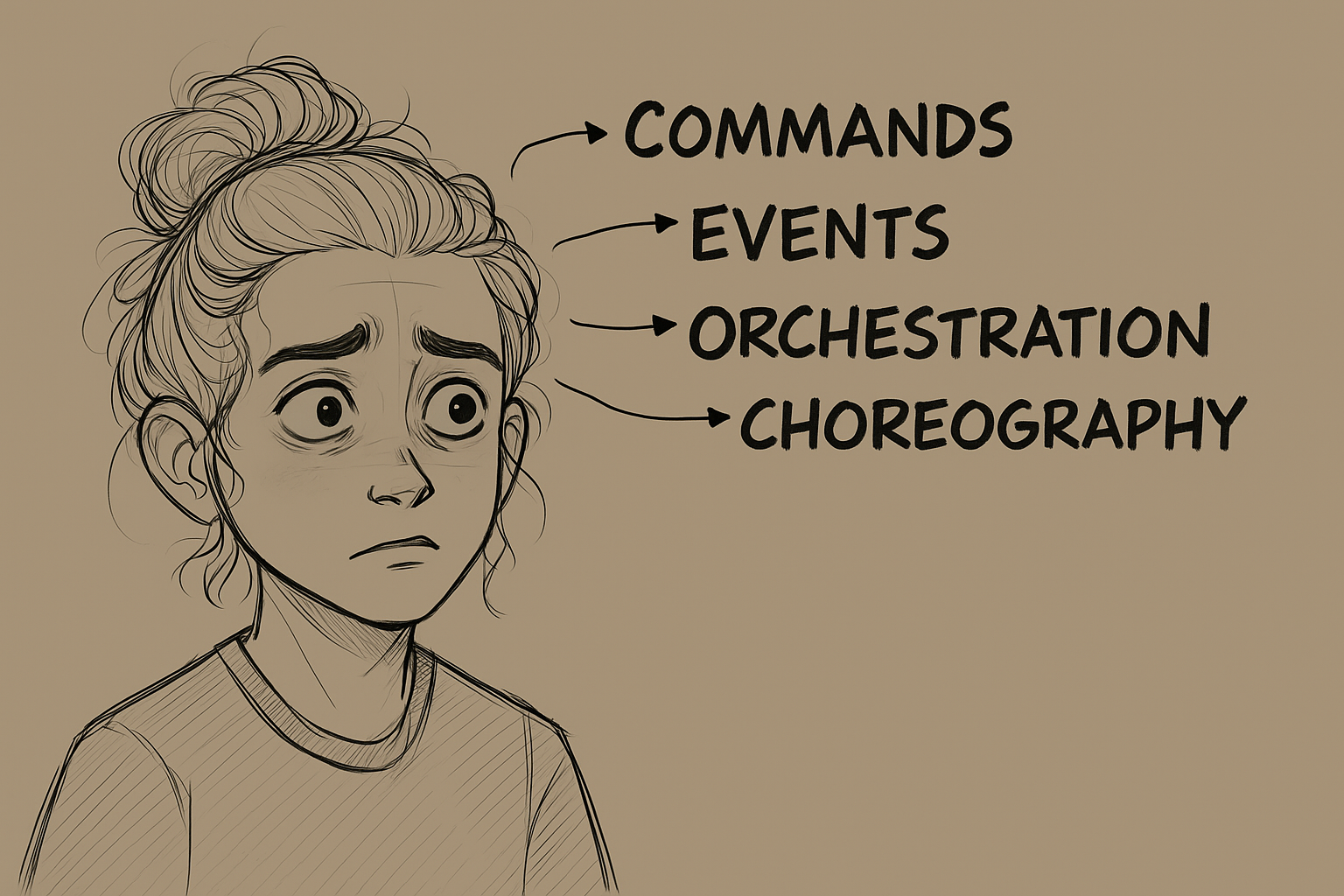
Designing distributed systems has never been more challenging. As teams embrace microservices and event‑driven architectures, a persistent myth has arisen: commands equal orchestration, and events equal choreography. This tidy equivalence often becomes a mental shortcut but conceals the deeper truth of control‑flow patterns versus messaging semantics. As many practitioners have observed, collapsing these separate dimensions can restrict your system's flexibility and resilience.
In this article, we'll demystify these concepts and show how to apply them independently. You'll discover how separating semantics (commands vs. events) from control flow (orchestration vs. choreography) grants you greater architectural freedom and clearer, more maintainable workflows.
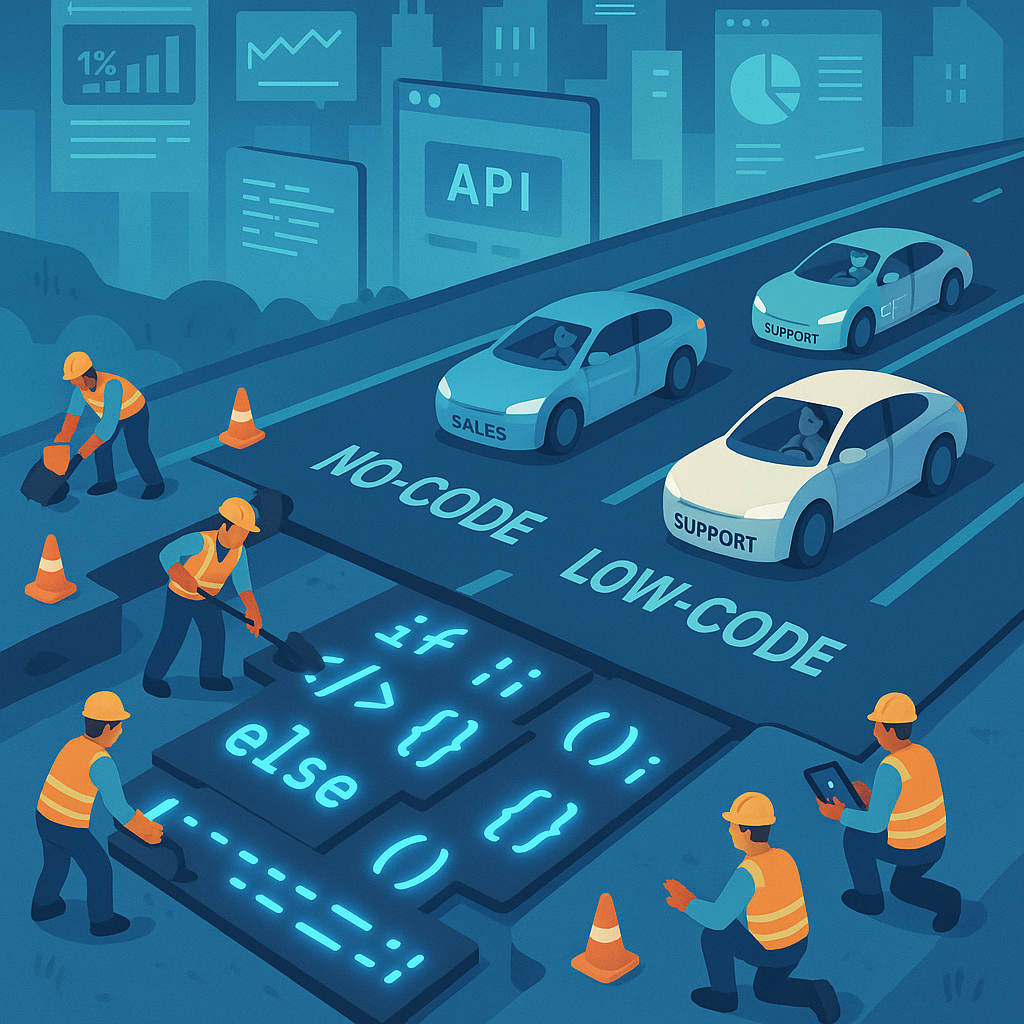
Last month, our company hackathon became a vivid illustration of a broader shift in how software gets built. Across teams, from sales to support, product to engineering, domain experts huddled around laptops, experimenting with AI powered platforms such as V0, Lovable and Bolt. Within hours, they'd fashioned interactive prototypes complete with navigation flows and validation rules, all without writing a single line of traditional code.
Although these early demos relied on mock data, the fact that non-engineers could conjure usable software unaided was striking.
As a full-stack engineer accustomed to crafting CRUD apps from the ground up, I found myself asking a new question: How might we empower these citizen developers to build more often, more securely, and with live data? Their deep problem domain knowledge meant they moved swiftly, iterated boldly and learned faster than any handoff-laden process could permit.
An isometric illustration of a futuristic highway under construction, where software engineers in hard hats are laying down glowing code-shaped road segments.
Over my two decades in software, I've discovered my highest leverage isn't in writing every screen or endpoint myself, but in architecting robust APIs, infrastructure and tooling so that others can deliver user value. In this two-part series, I'll share how engineers can transition from gatekeeping code to enabling creation at scale. In this first instalment, we'll explore the mindset shifts and guiding principles. Part 2 will dive into concrete patterns and architectural strategies for secure, sustainable enablement.
Two users withdraw money from the same account at exactly the same moment. Your system processes both requests, your database balance goes negative, and you wake up to an incident report. Sound familiar?
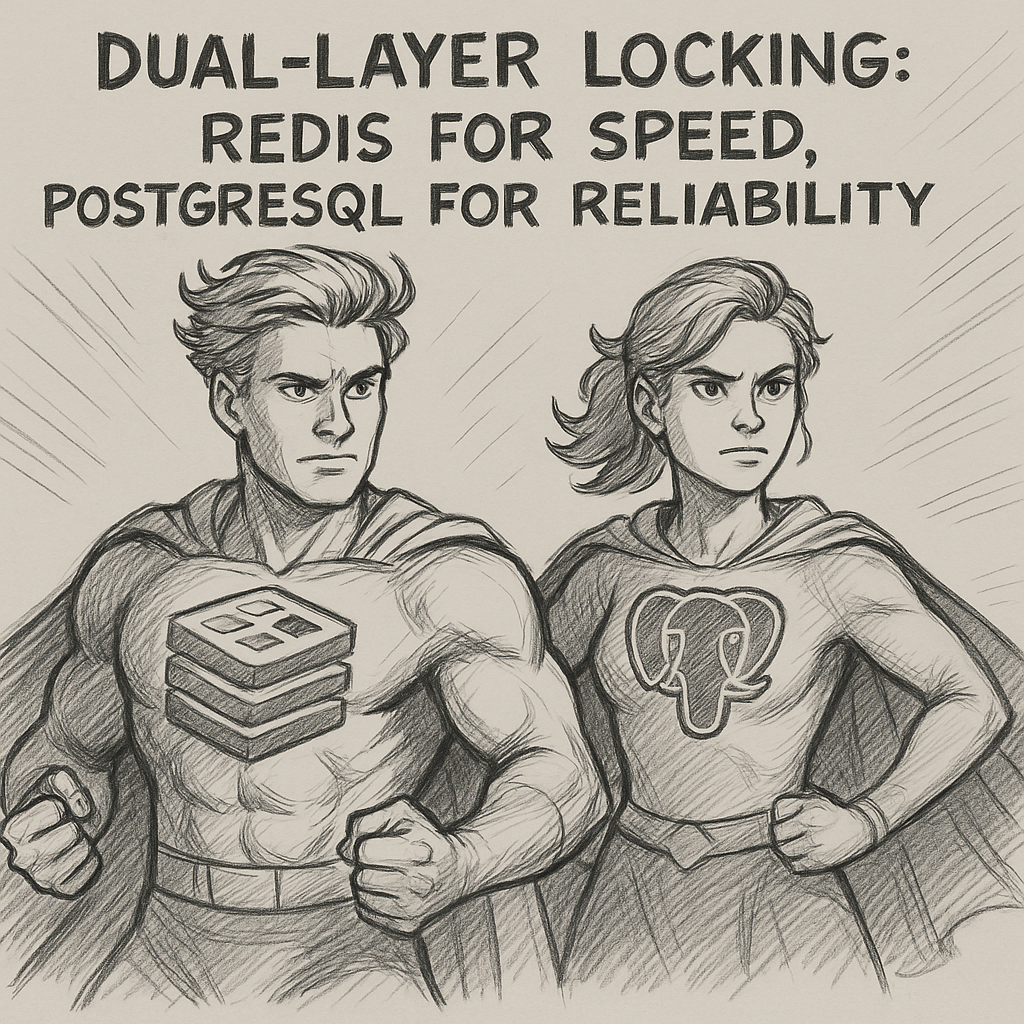
What if you could combine Redis's millisecond response times with PostgreSQL's bulletproof consistency? This dual-layer locking pattern does exactly that, giving you both speed and safety.
In this post, we'll explore a pattern that combines Redis's speed with PostgreSQL's reliability to prevent race conditions at scale.
In my career, I have realised that the best companies celebrate each success in a genuine, informal way. They avoid contrived rituals that can feel like an artificial façade.
In these organisations, individuals willingly help colleagues reach shared goals.
Take Janet from my local Parkrun, for example.
Although she does not compete, she choose to find the time to cheer on each participant to achieve their goals... even on cold Saturday mornings.
MCP standardises how AI applications communicate with external systems using JSON‑RPC 2.0 over stateful, bidirectional connections. Unlike standard JSON‑RPC, which treats every request independently, MCP augments the protocol by embedding session tokens and context IDs into each message.
This enhancement provides state, enabling advanced, multi‑step interactions and dynamic module loading at runtime. Such a stateful design is essential for modern, agile AI systems.
Imagine an AI‑powered payments system that dynamically integrates a new fraud detection module during operation. MCP allows the system to load this module on the fly without a full redeployment, provided the server supports dynamic module loading.
In this post, we'll explore the MCP protocol, its core components, and how it compares to traditional REST and GraphQL APIs.
AI applications are shifting from monolithic large language models to modular, multi-agent systems—a transformation that enhances performance, flexibility, and maintainability.
In my talk about AI Agents last September, I said AI agents would become increasingly popular. Today, we see this shift happening across industries. By breaking down complex tasks into specialised components, engineers can design smarter, more scalable AI workflows.
Analogy: Think of multi-agent systems like a well-coordinated orchestra. Each musician (agent) has a specific role, and together, they create a harmonious performance. In software, this means dividing complex problems into manageable, specialised parts that work in concert.
In this guide, we'll explore four key multi-agent patterns, using travel booking as an example. You'll learn how to choose the right pattern for your application, implementation strategies, and error-handling techniques to build robust multi-agent AI systems.